
Claude Lelouch
b. 1937 · French film director, writer, producer and actor
Biography
Claude Lelouch (born in Paris in 1937) is a French filmmaker who has worked as a director, screenwriter, producer, cinematographer, editor and actor. He emerged as a prominent director in the 1960s, and a career spanning more than half a century has made him one of the best-known French authors of the late twentieth century. Beyond cinema he has also written books, and in 2016 he was named a Commander of the Order of the Crown.
Born in the 9th arrondissement of Paris, he was the son of a mother who had converted to Judaism and a father from an Algerian Jewish family. He has said that cinema protected him as a child, when his mother hid him in movie theaters while the two were hunted by the Gestapo. After he failed his baccalaureate, his father bought him a camera, and he began making reportages, one of them on daily life in the Soviet Union, and later filmed sporting events such as the 24 Hours of Le Mans and the Tour de France. He served in the French Army in a film unit and was demobilized in 1960, the year he made his first feature, Le Propre de l'homme, which critics treated harshly.
His breakthrough came with A Man and a Woman (1966), which won the Palme d'Or at Cannes and two Oscars, for Best Original Screenplay and Best Foreign Language Film. Lelouch was also nominated for Best Director, making him one of the youngest nominees in that category. Francis Lai's score, with its theme sung by Nicole Croisille and Pierre Barouh, became a hit and has inspired hundreds of versions. Lelouch worked with Lai more than two dozen times.
His films often blend sentimental melodrama with a strong sense of music and rhythm. Vivre pour vivre (1967) earned an Oscar nomination for Best Foreign Language Film, and L'aventure c'est l'aventure (1972) brought together Lino Ventura and Jacques Brel. In 1971 he won the David di Donatello for Best Foreign Director for Le Voyou. Many critics regard Les Uns et les Autres, a large musical epic with choreography by Maurice Béjart, as his masterpiece. His methods and style have drawn criticism over the years, yet his name remains tied to popular French cinema with international reach.
In 2020 he made Le Grand Rendez-vous, a new version of his 1976 short C'était un rendez-vous, set in Monaco and starring racing driver Charles Leclerc in a Ferrari. The film was poorly received by several critics. Lelouch remains active, and his filmography runs to around fifty titles, which keeps him among the most prolific figures in French cinema.
Key films
- A Man and a Woman (1966): his international breakthrough, with the Palme d'Or and two Oscars.
- Vivre pour vivre (1967): nominated for the Academy Award for Best Foreign Language Film.
- L'aventure c'est l'aventure (1972): a drama with Lino Ventura and Jacques Brel.
- Toute une vie (1974): a drama that returns to his interest in couples and the passing of time.
Trivia
A car at full speed
His 1976 short C'était un rendez-vous is filmed entirely from the point of view of the car, a Ferrari driven through the streets of Paris at dawn. Legend has it that Lelouch was arrested after its first public screening.
A remake in Monaco
In 2020 he made Le Grand Rendez-vous, a new take on that short set in Monaco. It was shot on the Circuit de Monaco on 24 May 2020, with Charles Leclerc driving a Ferrari SF90 Stradale.
On Cinematopedia
 A Man and a Woman1966
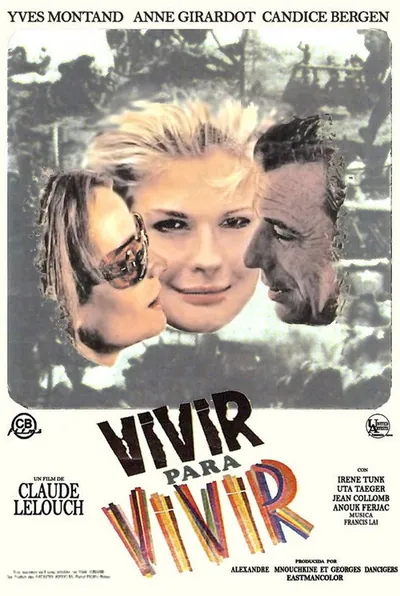 Live for Life1967
 To Each His Own Cinema2007
 Les Misérables1995
 Lumière and Company1995
 L'aventure, c'est l'aventure1972
 And Now My Love1974Itinerary of a Spoiled Child1988Itinerary of a Spoiled Child1988
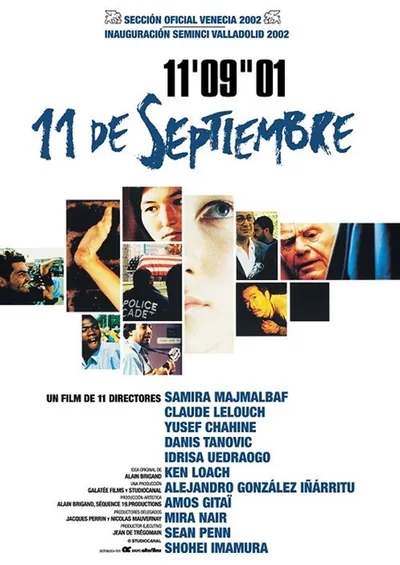 11'09"01 September 112002
 Love Is a Funny Thing1969
 Happy New Year1973
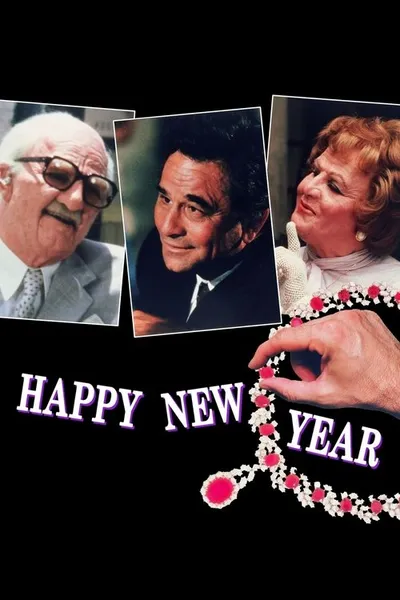 Happy New Year1987
- Le Propre de l'Homme 1960 · director, screenplay, cast
- In the Affirmative 1962 · director, cinematography, screenplay, editing
- To Be a Crook 1964 · director, screenplay, producer
- La Femme Spectacle 1964 · director, screenplay
- A Man and a Woman 1966 · director, cinematography, screenplay, producer
- Live for Life 1967 · director, screenplay, editing
- Far from Vietnam 1967 · director
- 13 Days in France 1968 · director
- Love Is a Funny Thing 1969 · director, screenplay
- Life Love Death 1969 · director, screenplay
- Le Voyou 1970 · director, screenplay
- Smic Smac Smoc 1971 · director, screenplay, cast
- L'aventure, c'est l'aventure 1972 · director, screenplay
- Happy New Year 1973 · director, cinematography, screenplay
- Far West 1973 · cast
- And Now My Love 1974 · director, screenplay, producer
- Cat and Mouse 1975 · director, screenplay
- Second Chance 1976 · director, screenplay, producer
- The Good and the Bad 1976 · director, screenplay
- Robert et Robert 1978 · director, screenplay, producer
- Molière 1978 · producer
- Us Two 1979 · director, screenplay, producer
- Édith et Marcel 1983 · director, screenplay, producer
- Viva la vie 1984 · director, screenplay, producer
- Partir, revenir 1985 · director, producer
- A Man and a Woman: 20 Years Later 1986 · director, screenplay, producer
- Happy New Year 1987 · screenplay, cast
- Attention bandits! 1987 · director, screenplay, producer
- Itinerary of a Spoiled Child 1988 · director, screenplay
- There Were Days... and Moons 1990 · director, screenplay
- La Belle Histoire 1992 · director, screenplay
- All That... for This?! 1993 · director, cinematography, screenplay, producer
- Les Misérables 1995 · director, cinematography, screenplay, producer
- Lumière and Company 1995 · director, cast
- Men, Women: A User's Manual 1996 · director, screenplay
- Chance or Coincidence 1998 · director, screenplay
- One 4 All 1999 · director, screenplay, cast
- 11'09"01 September 11 2002 · director, screenplay
- And Now... Ladies and Gentlemen 2002 · director, screenplay, producer
- Les Parisiens 2004 · director, screenplay
- Le courage d'aimer 2005 · director, screenplay
- To Each His Own Cinema 2007 · director
- Roman de Gare 2007 · director, screenplay, producer
- What War May Bring 2010 · director, screenplay
- Salaud, on t'aime 2014 · director, cinematography, screenplay
- One Plus One 2015 · director
- The Best Years of a Life 2019 · director, screenplay, producer
Original Cinematopedia text based on Wikipedia (es) and Wikipedia (en) and Wikidata.