
Charles Hawtrey
1914–1988 · English actor and comedian
Biography
Charles Hawtrey (Hounslow, 1914 – Deal, 1988) was an English actor and comedian, best remembered for his long run in the Carry On films. Born George Frederick Joffre Hartree, he took his stage name from the theatrical knight Sir Charles Hawtrey. Alongside acting he directed plays and worked as a singer and pianist, moving between stage, film, radio and television over a long career.
He began young, both on stage and in films. In the 1930s he appeared in Will Hay comedies such as Good Morning, Boys (1937), and he had a small part in Alfred Hitchcock's Sabotage (1936). During the Second World War he found success in music revue, notably in New Faces (1940), and later worked in the West End and on children's radio. On television he played the soldier Professor Hatchett in The Army Game. From 1958 he became a regular in the Carry On series, playing timid and effeminate characters, always in his trademark round spectacles. His drinking sometimes made filming difficult, according to colleagues and the producer Peter Rogers. After leaving film in 1972 he appeared in pantomimes until 1979. He died in Deal in 1988, after a fall and complications linked to long-term smoking. He is remembered today as one of the most recognisable faces of 1960s British screen comedy.
Key films
- Sabotage (1936): directed by Alfred Hitchcock, an early adult film role.
- Passport to Pimlico (1949): a bar-hand and pianist in this Ealing comedy.
- Carry On Sergeant (1958): the first film in the series, where his best-known work began.
- Carry On Teacher (1959): a school-set entry in the series, playing to the group's formula.
- Carry On Cleo (1964): a spy spoof and historical parody, typical of the series.
- Carry On Doctor (1967): one of his 1960s entries, in his familiar comic persona.
Trivia
Stage name
Born George Frederick Joffre Hartree, he took his stage name from the actor Sir Charles Hawtrey. He encouraged the suggestion that he was the actor's son, though his father was in fact a London car mechanic.
London debut
His London stage debut came around 1932, singing the White Cat in the juvenile opera Bluebell in Fairyland at the Scala Theatre.
On Cinematopedia
 Sabotage1936
 A Canterbury Tale1944
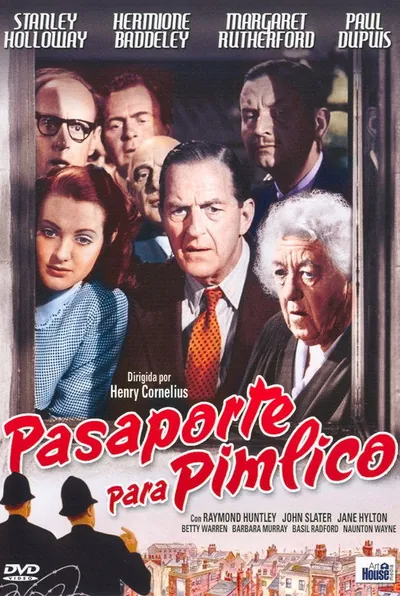 Passport to Pimlico1949
 Carry On Up the Khyber1968
 Carry On Cleo1964
 Carry On Sergeant1958
 Carry On Spying1964
 Carry On Nurse1959
 Carry On Henry1971
 Carry On Teacher1959
 Carry On Constable1960
 Carry On Cabby1963
- Sabotage 1936 · cast
- A Canterbury Tale 1944 · cast
- Passport to Pimlico 1949 · cast
- Man of the Moment 1955 · cast
- Carry On Sergeant 1958 · cast
- Carry On Nurse 1959 · cast
- Carry On Teacher 1959 · cast
- Carry On Constable 1960 · cast
- Carry On Regardless 1961 · cast
- Carry On Cabby 1963 · cast
- Carry On Cleo 1964 · cast
- Carry On Spying 1964 · cast
- Carry On Jack 1964 · cast
- Carry On Cowboy 1965 · cast
- Don't Lose Your Head 1966 · cast
- Carry On Screaming! 1966 · cast
- Carry On Doctor 1967 · cast
- Follow That Camel 1967 · cast
- Carry On Up the Khyber 1968 · cast
- Carry On Again Doctor 1969 · cast
- Carry On Camping 1969 · cast
- Carry On Loving 1970 · cast
- Carry On Up the Jungle 1970 · cast
- Carry On Henry 1971 · cast
- Carry On at Your Convenience 1971 · cast
- Carry On Matron 1972 · cast
- Carry On Abroad 1972 · cast
Original Cinematopedia text based on Wikipedia (es) and Wikipedia (en) and Wikidata.