
Charles Coburn
1877–1961 · American actor of stage and screen
Biography
Charles Coburn (born in Georgia, June 19, 1877 – died in New York City, August 30, 1961) was an American stage and film actor who won an Academy Award for Best Supporting Actor. Trained on the Broadway stage, he came to films late in life, after turning fifty, and became one of the most recognizable character actors of the 1940s and 1950s.
His career began in the theater. As a teenager he worked at the Savannah Theater in Georgia doing odd jobs, and by his late teens he was reportedly managing the house. He made his Broadway debut in 1901. Around 1905 he formed an acting company with his first wife, actress and producer Ivah Wills, whom he married in 1906. The couple performed often on Broadway while running the company, and he continued stage work until her death in 1937.
After losing his wife he moved to Los Angeles and began working in films. His first notable credits came in the late 1930s, among them Of Human Hearts (1938) and Bachelor Mother (1939). He is best remembered for comic roles, playing gentlemanly figures, genial fathers and businessmen, but he also showed dramatic range in Kings Row and Wilson. His Oscar came for The More the Merrier in 1943, a film he made after two earlier nominations, for The Devil and Miss Jones in 1941 and The Green Years in 1946.
During the 1940s he served as vice president of the Motion Picture Alliance for the Preservation of American Ideals, a group that opposed leftist influence in Hollywood during the Cold War. A committed Republican, he backed Thomas Dewey in the 1944 presidential election. Sources also link him to the White Citizens' Council, a segregationist organization opposed to civil rights for Black Americans, a fact that is part of any honest account of his public life.
He married Winifred Natzka in 1959 and died of a heart attack in New York in 1961, aged 84. In 1960 he received a star on the Hollywood Walk of Fame for his contribution to the film industry. His legacy rests largely on a long run of memorable supporting performances in the studio era's comedies and dramas.
Key films
- The More the Merrier (1943). Role of Benjamin Dingle, which earned him the Academy Award for Best Supporting Actor.
- The Devil and Miss Jones (1941). Comedy in which he plays a key part in the cast, and which brought him his first Oscar nomination.
- Kings Row (1942). One of his most remembered dramatic roles, in a darker Hollywood drama.
- Wilson (1944). Biopic of Woodrow Wilson that shows his more serious side.
- Gentlemen Prefer Blondes (1953). Musical comedy in which he shares the spotlight with Marilyn Monroe.
- Around the World in Eighty Days (1956). Large-scale adventure production of the era, with a notable supporting part.
Trivia
Early start in the theater
According to the sources, as a teenager he handled odd jobs at the Savannah Theater, handing out programs and ushering. By about seventeen or eighteen he was managing the theater.
Star on the Walk of Fame
In 1960 he was honored with a star on the Hollywood Walk of Fame for his contribution to the film industry.
On Cinematopedia
 Around the World in 80 Days1956
 Wilson1944
 Gentlemen Prefer Blondes1953
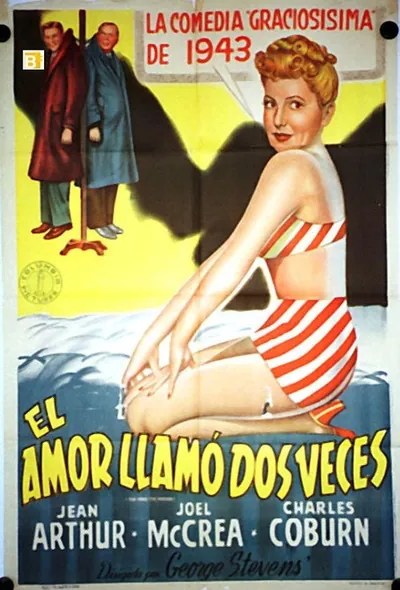 The More the Merrier1943
 The Lady Eve1941
 The Paradine Case1947
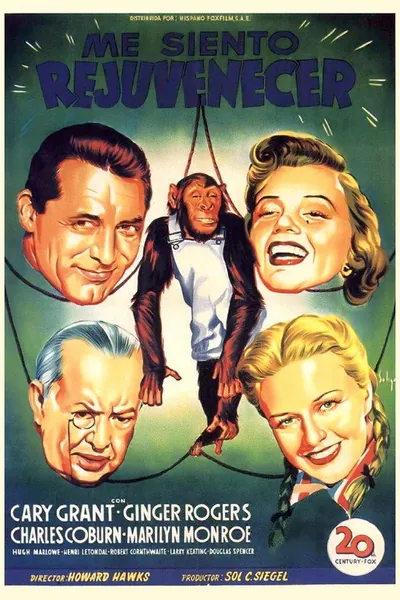 Monkey Business1952
 Heaven Can Wait1943
 Kings Row1942
 Princess O'Rourke1943
 The Devil and Miss Jones1941
 Pepe1960
- Vivacious Lady 1938 · cast
- Of Human Hearts 1938 · cast
- Bachelor Mother 1939 · cast
- The Story of Alexander Graham Bell 1939 · cast
- Idiot's Delight 1939 · cast
- Made for Each Other 1939 · cast
- Stanley and Livingstone 1939 · cast
- In Name Only 1939 · cast
- Road to Singapore 1940 · cast
- Edison, the Man 1940 · cast
- Three Faces West 1940 · cast
- The Lady Eve 1941 · cast
- The Devil and Miss Jones 1941 · cast
- H. M. Pulham, Esq. 1941 · cast
- Kings Row 1942 · cast
- In This Our Life 1942 · cast
- George Washington Slept Here 1942 · cast
- The More the Merrier 1943 · cast
- Heaven Can Wait 1943 · cast
- Princess O'Rourke 1943 · cast
- The Constant Nymph 1943 · cast
- Wilson 1944 · cast
- Together Again 1944 · cast
- Rhapsody in Blue 1945 · cast
- A Royal Scandal 1945 · cast
- The Green Years 1946 · cast
- The Paradine Case 1947 · cast
- Lured 1947 · cast
- Green Grass of Wyoming 1948 · cast
- B.F.'s Daughter 1948 · cast
- Impact 1949 · cast
- The Doctor and the Girl 1949 · cast
- Louisa 1950 · cast
- Monkey Business 1952 · cast
- Has Anybody Seen My Gal? 1952 · cast
- Gentlemen Prefer Blondes 1953 · cast
- Trouble Along the Way 1953 · cast
- How to Be Very, Very Popular 1955 · cast
- Around the World in 80 Days 1956 · cast
- The Story of Mankind 1957 · cast
- John Paul Jones 1959 · cast
- Pepe 1960 · cast
Original Cinematopedia text based on Wikipedia (es) and Wikipedia (en) and Wikidata.