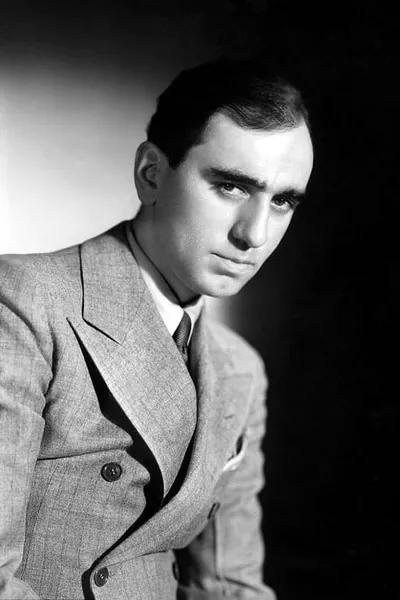
Busby Berkeley
1895–1976 · American film director and musical choreographer
Biography
William Berkeley Enos, known as Busby Berkeley (Los Angeles, 1895 – Palm Springs, 1976), was an American film director and choreographer whose name is tied to Hollywood musicals of the Depression era and the 1940s. He is remembered above all for the elaborate production numbers of the sound era, built on geometric formations of dancers and camera angles rarely used in the genre at the time.
The son of stage actors, Berkeley made his stage debut at five, performing with his family. After serving as an artillery lieutenant in the First World War, where he drilled large numbers of soldiers in complex choreography, he worked on Broadway during the 1920s as dance director on a number of musicals. There he learned to handle large groups of dancers, a skill he later carried to the screen once sound made larger stagings practical.
His first film work came with Samuel Goldwyn's Eddie Cantor musicals, where he began using individual close-ups of each chorus girl and sweeping movements across the stage. His reputation was secured in 1933 with several musicals for Warner Brothers, among them Footlight Parade and Gold Diggers of 1933. Berkeley insisted that each new number should outdo the last, and he stood out from many directors of his time by moving the camera and shooting from overhead.
As large-scale musicals fell out of fashion, he turned to dramatic storytelling, with They Made Me a Criminal in 1939 among the results. At MGM he worked with stars such as Judy Garland, although clashes with her led to his removal from Girl Crazy in 1943, though the number he had directed stayed in the film. That same year he choreographed Carmen Miranda's memorable number in The Gang's All Here for 20th Century-Fox.
His private life was as flamboyant as his work. A fatal car crash in 1935 led to a court case from which he was acquitted, and he attempted suicide in 1946. Interest in his films revived in the late 1960s, when the camp craze brought them back, and he returned to Broadway to direct a successful revival of No, No, Nanette. His legacy lies in turning the film musical into a distinctive visual spectacle whose influence is still visible.
Key films
- Gold Diggers of 1933 (1933), with the number that defined his style
- Footlight Parade (1933), a Warner musical that helped secure his fame
- They Made Me a Criminal (1939), his move into drama starring John Garfield
- Ziegfeld Girl (1941), an MGM musical with large ensemble numbers
- The Gang's All Here (1943), where he choreographed Carmen Miranda's number
- The Pirate...
On Cinematopedia
 Annie Get Your Gun1950
 Gold Diggers of 19331933
 Strike Up the Band1940
 Ziegfeld Girl1941
 Babes in Arms1939
 Footlight Parade1933
 The Gang's All Here1943
 Gold Diggers of 19351935
 They Made Me a Criminal1939
 Cabin in the Sky1943
 Girl Crazy1943
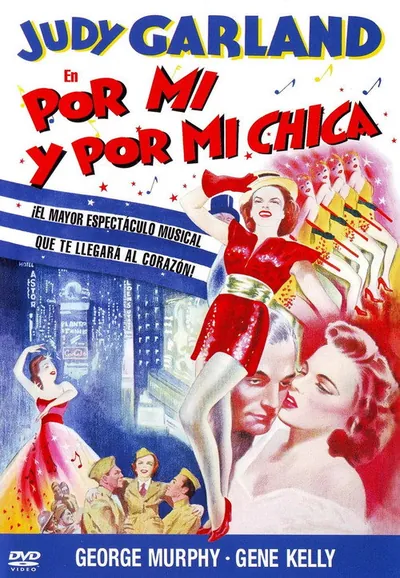 For Me and My Gal1942
- Gold Diggers of 1933 1933 · director, cast
- Footlight Parade 1933 · cast
- Dames 1934 · director
- Wonder Bar 1934 · director
- Gold Diggers of 1935 1935 · director
- Gold Diggers of 1937 1936 · director
- Hollywood Hotel 1937 · director
- Comet over Broadway 1938 · director
- Babes in Arms 1939 · director
- They Made Me a Criminal 1939 · director
- Fast and Furious 1939 · director
- Strike Up the Band 1940 · director
- Ziegfeld Girl 1941 · director
- Babes on Broadway 1941 · director
- For Me and My Gal 1942 · director
- The Gang's All Here 1943 · director
- Cabin in the Sky 1943 · director
- Girl Crazy 1943 · director
- Annie Get Your Gun 1950 · director
- Take Me Out to the Ball Game 1950 · director
Original Cinematopedia text based on Wikipedia (es) and Wikipedia (en) and Wikidata.