
Budimir Metalnikov
1925–2001 · Soviet and Russian screenwriter and film director
Biography
Budimir Metalnikov was a Soviet and Russian screenwriter and film director, born in Moscow in 1925 and dying there in 2001. He is best known for writing socially minded dramas, particularly stories set in the countryside, during the second half of the Soviet era. He also directed a few features and explored science fiction.
His childhood was upset by the arrest of his parents in 1937 and by his separation from his younger sister, whom he never managed to find. He served in the Red Army during the Second World War and was seriously wounded. After returning home he studied screenwriting at VGIK under Yevgeny Gabrilovich and Ilya Vicefield, graduating in 1954. His breakthrough came with A Home for Tanya (1959), directed by Lev Kulidzhanov. A Simple Story (1960) followed and became one of the biggest box office hits in Soviet history. He co-wrote Tchaikovsky, directed by Igor Talankin, which earned Oscar nominations. His films favour relationships between people over collective farming, with a romantic tone and plenty of humour. He taught at the High Courses for Scriptwriters and Film Directors from 1966.
Key films
- A Home for Tanya (1959), a breakthrough for Metalnikov as a screenwriter, directed by Lev Kulidzhanov.
- A Simple Story (1960), directed by Yuri Yegorov, one of the most watched Soviet films.
- The Silence of Dr. Evans (1973), a science fiction drama he directed himself, with Sergei Bondarchuk in the lead.
- Tchaikovsky (1970), a biopic directed by Igor Talankin and co-written with Yuri Nagibin, nominated for two Oscars.
- The End of Eternity (1987), an adaptation of Isaac Asimov's novel directed by Andrei Yermash, co-written by Metalnikov.
Trivia
A lost sister
After being separated from his sister Marina in childhood, Metalnikov never managed to find her, despite repeated attempts.
Oscar nominations
Tchaikovsky received two Academy Award nominations in 1972, for Best Foreign Language Film and for its score.
On Cinematopedia
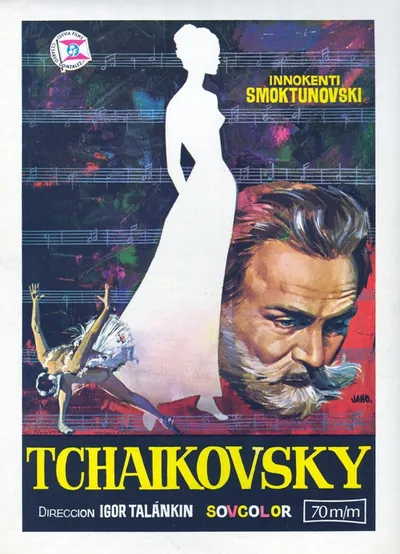 Tchaikovsky1970A Home for Tanya1959A Home for Tanya1959A Simple Story1960A Simple Story1960
 The Silence of Dr. Evans1974Alyosha's Love1961Alyosha's Love1961Women1966Women1966Three Times About Love1981Three Times About Love1981The End of Eternity1987The End of Eternity1987Coasts in the Mist1986Coasts in the Mist1986
Original Cinematopedia text based on Wikipedia (en) and Wikidata.