
Brigitte Bardot
1934–2025 · French actress, singer, model and animal rights activist
Biography
Brigitte Bardot (Paris, 1934-Saint-Tropez, 2025) was a French actress who also became known as a singer, model and animal rights activist. She became one of the most recognisable faces of European cinema in the 1950s and 1960s and a symbol of the sexual revolution of her era. Her image influenced fashion and popular culture well beyond the screen, and although she left acting in 1973, she remained a major cultural figure for decades afterwards.
Born in Paris into a comfortable family, Bardot grew up under strict discipline. As a child she trained in ballet and classical dance and was admitted to the Paris Conservatoire, where she studied with the Russian choreographer Boris Knyazev, whose demanding teaching left a mark on her posture and movement. In the late 1940s she began modelling for fashion magazines, and in 1950 she appeared on the cover of Elle, which led to film offers. Her first screen appearance came in 1952, the same year she married the director Roger Vadim, who would shape her early career and with whom she had a turbulent relationship.
The breakthrough came with And God Created Woman (1956), directed by Vadim, which made her an international name. In the United States the film was an unusually successful foreign release, and the press nicknamed her the sex kitten. She then worked with respected filmmakers: with Jean-Luc Godard on Contempt (1963), with Louis Malle on Viva Maria! (1965), for which she was nominated for a BAFTA as best foreign actress, and with Henri-Georges Clouzot on The Truth (1960), which earned her an Italian award. Because her English was limited, she was dubbed in several of her international productions. In 1959 Simone de Beauvoir devoted an essay to her, presenting her as a emblem of female emancipation. She also recorded more than sixty songs and several albums, including one with Serge Gainsbourg.
After retiring in 1973, she devoted herself to animal welfare and in 1986 founded the Brigitte Bardot Foundation. Her public profile also brought controversy. In the 1990s and 2000s she criticised immigration and Islam in France, which led to several fines for inciting racial hatred, and during the COVID-19 pandemic she opposed the government's health policy. She was awarded the Legion of Honour in 1985 but refused it. Her legacy combines the screen myth of the 1950s and 1960s with an animal advocacy cause she sustained for decades.
Key films
- And God Created Woman (1956): the role that made her an international star and a defining image of the era.
- The Truth (1960): a courtroom drama directed by Henri-Georges Clouzot, showing her dramatic range.
- Contempt (1963): her collaboration with Jean-Luc Godard, one of the most discussed films about cinema and marriage.
- Viva Maria! (1965): Louis Malle's adventure comedy, which earned her a BAFTA nomination.
Trivia
An essay by Simone de Beauvoir
In 1959 the philosopher Simone de Beauvoir devoted an essay to her, The Lolita Syndrome, which presented her as a key figure in French female emancipation.
A change of colour
For the Italian film Nero's Weekend (1956), the director asked her to appear as a blonde. Rather than wear a wig, she dyed her naturally dark hair and, pleased with the result, kept the colour.
A presidential compliment
President Charles de Gaulle described her as a French export as important as Renault cars, a remark that sums up her weight in the country's international image.
On Cinematopedia
 Contempt1963
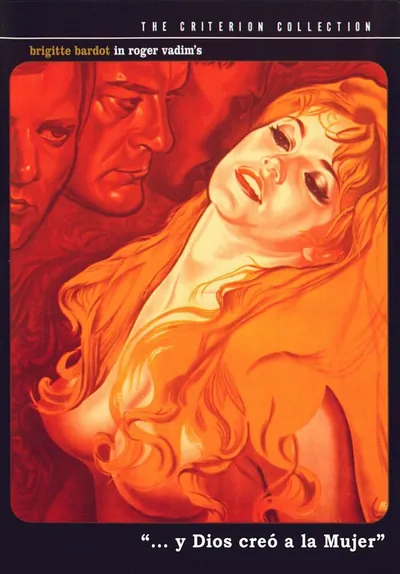 And God Created Woman1956
 The Truth1960
 Viva Maria!1965
 Helen of Troy1956
 Masculin Féminin1966
 Spirits of the Dead1968
 Shalako1968
 Royal Affairs in Versailles1954
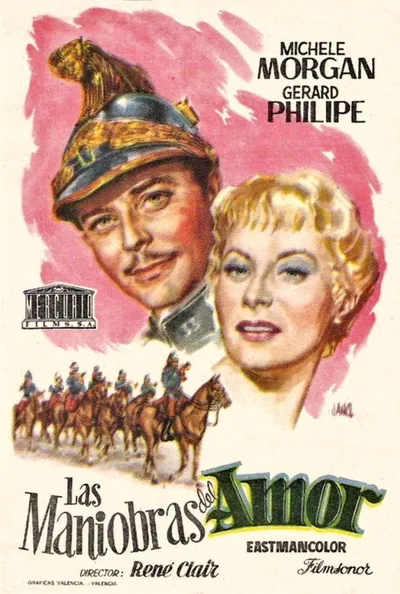 The Grand Maneuver1955
 Testament of Orpheus1960
 Doctor at Sea1955
- Manina, the Girl in the Bikini 1952 · cast
- The Long Teeth 1952 · cast
- Crazy for Love 1952 · cast
- Act of Love 1953 · cast
- His Father's Portrait 1953 · cast
- Royal Affairs in Versailles 1954 · cast
- Concert of Intrigue 1954 · cast
- The Grand Maneuver 1955 · cast
- Doctor at Sea 1955 · cast
- Caroline and the Rebels 1955 · cast
- School for Love 1955 · cast
- The Light Across the Street 1955 · cast
- And God Created Woman 1956 · cast
- Helen of Troy 1956 · cast
- Plucking the Daisy 1956 · cast
- Nero's Weekend 1956 · cast
- Naughty Girl 1956 · cast
- The Bride Is Much Too Beautiful 1956 · cast
- The Parisian 1957 · cast
- In Case of Adversity 1958 · cast
- The Night Heaven Fell 1958 · cast
- Babette Goes to War 1959 · cast
- A Woman Like Satan 1959 · cast
- Come Dance with Me 1959 · cast
- The Truth 1960 · cast
- Testament of Orpheus 1960 · cast
- It Happened All Night 1960 · cast
- A Very Private Affair 1961 · cast
- Please, Not Now! 1961 · cast
- Love on a Pillow 1962 · cast
- Contempt 1963 · cast
- The Ravishing Idiot 1963 · cast
- Paparazzi 1963 · cast
- Viva Maria! 1965 · cast
- Dear Brigitte 1965 · cast
- Masculin Féminin 1966 · cast
- Two Weeks in September 1967 · cast
- Spirits of the Dead 1968 · cast
- Shalako 1968 · cast
- Les Femmes 1969 · cast
- The Bear and the Doll 1970 · cast
- The Beginner 1970 · cast
- The Legend of Frenchie King 1971 · cast
- Rum Runners 1971 · cast
- Don Juan, or If Don Juan Were a Woman 1973 · cast
- The Edifying and Joyous Story of Colinot 1973 · cast
Original Cinematopedia text based on Wikipedia (es) and Wikipedia (en) and Wikidata.