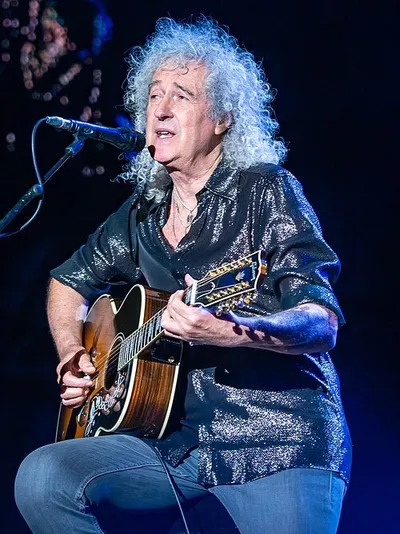
Brian May
b. 1947 · British guitarist, songwriter and astrophysicist
Biography
Sir Brian May (born 19 July 1947) is a British guitarist, songwriter, singer and astrophysicist, best known as the lead guitarist and one of the main songwriters of Queen. His name is tied to the stadium rock of the 1970s and 1980s, and his layered guitar sound, partly built around an instrument he made himself, has influenced several generations of players. His screen work is smaller and comes mostly through music, although he has also taken part in film projects as a performer and producer.
He was born in Hampton Hill, near Twickenham, the only child of Harold May, an electronics engineer who served in the Royal Air Force during the Second World War, and Ruth Irving Fletcher, who was Scottish. As a boy he was drawn to both music and astronomy. He started on the ukulele, an instrument his father played well, and received his first acoustic guitar at the age of seven. He won a place at Hampton Grammar School, where he excelled in physics and mathematics, and then studied physics at Imperial College London, graduating in 1968. During those years he formed the band 1984 with Tim Staffell, named after George Orwell’s novel, and later Smile with drummer Roger Taylor. When Farrokh Bulsara joined as vocalist and became Freddie Mercury, the group took the name Queen in 1970, and John Deacon completed the line-up in 1971. With the album A Night at the Opera and its single “Bohemian Rhapsody”, the band became one of the biggest rock acts in the world. May wrote many of its hits, among them “We Will Rock You”, “Fat Bottomed Girls”, “Who Wants to Live Forever” and “The Show Must Go On”, and the Red Special guitar he built with his father became his unmistakable instrument. His performance at Live Aid in 1985 is remembered as one of the band’s most acclaimed.
After Mercury died in 1991, Queen entered a general hiatus, with exceptions such as the 1992 tribute concert and the 1997 single “No-One but You (Only the Good Die Young)”, which May wrote. May and Taylor later revived the band with other singers, including Paul Rodgers and Adam Lambert. Outside Queen, May played with Eddie Van Halen in 1983 and contributed to Steve Hackett’s work. In parallel he returned to academic life and earned a PhD in astrophysics from Imperial College in 2007. That scientific profile led him to work as a collaborator with NASA’s New Horizons Pluto mission and, later, with the OSIRIS-REx mission, and an asteroid bears his name. He is also an animal welfare activist, campaigning against fox hunting and the culling of badgers in the United Kingdom. He was appointed a Commander of the Order of the British Empire in 2005 and was knighted in 2023. His health has had difficult moments: he suffered a heart attack in 2020 and a stroke in 2024 that temporarily affected his left arm. His legacy joins guitar playing, songwriting and science communication, and remains closely tied to the memory of Queen.
Key films
- Bohemian Rhapsody (2018), biopic about Queen centred on the band’s music
- Queen on Fire: Live at the Bowl (2004), live recording of the band’s concert at the Bowl
- We Are the Champions: Final Live in Japan (1992), document of Queen’s final tour in Japan
- Magic Tour: Live in Budapest (1987), live recording of the Magic Tour in Budapest
Trivia
A home-built guitar
The Red Special is an electric guitar that May built together with his father, and he played it from his early gigs with 1984 in 1966.
An asteroid named after him
Asteroid 52665 Brianmay was named in his honour, recognising his work as a guitarist and astrophysicist.
Against tobacco
Because his father was a long-term smoker, May detests tobacco and has banned it from his most recent concerts.
On Cinematopedia
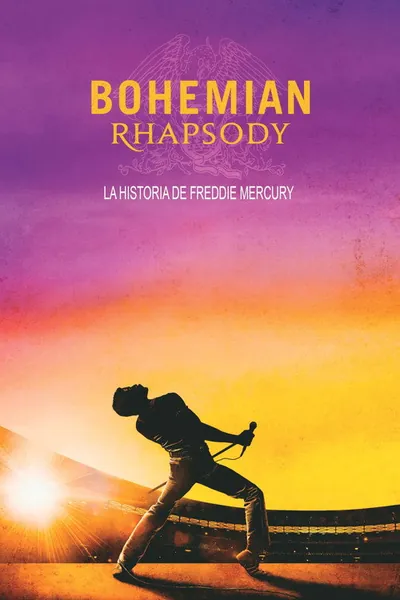 Bohemian Rhapsody
 Queen on Fire – Live at the Bowl
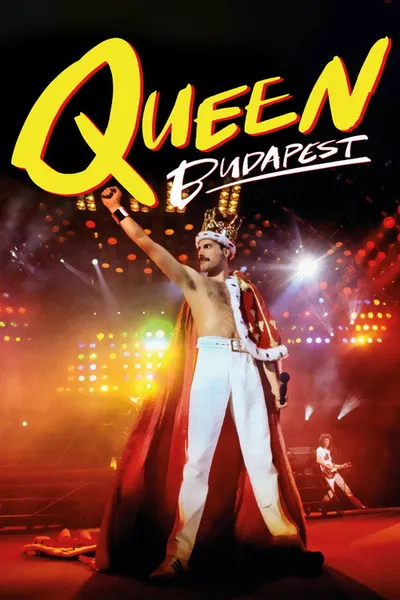 Hungarian Rhapsody: Queen Live in Budapest
 Furia
 Bloodmoon
Original Cinematopedia text based on Wikipedia (es) and Wikipedia (en) and Wikidata.