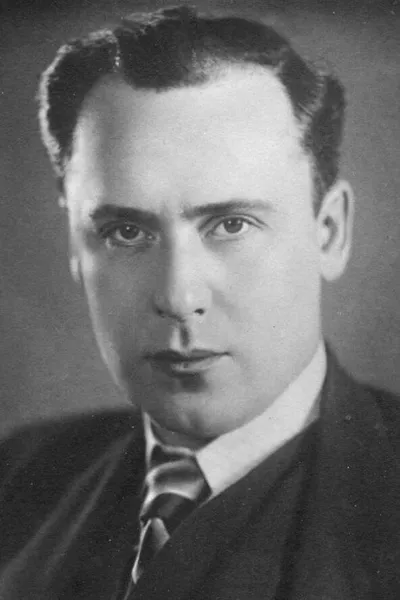
Boris Livanov
1904–1972 · Soviet actor and theatre director
Biography
Boris Livanov (Moscow, 1904-1972) was a Soviet actor and theatre director who spent almost his entire career with the Moscow Art Theatre, where he belonged from 1924 until his death. Both on stage and on screen he became one of the most respected performers in the Soviet Union.
The son of the actor Nikolai Livanov, he left home at sixteen to fight with the Red Army in Turkestan, but soon returned to Moscow and trained at the Moscow Art Theatre's Fourth Studio. His range covered drama and comedy, and his expressive style earned him leading parts such as Nozdryov in Dead Souls and Chatsky in Woe from Wit. He made his screen debut in 1924 with Morozko. In 1927 he took his first serious parts in revolutionary films, including October. During the 1930s he appeared in Dubrovsky and in the historical epic Minin and Pozharsky, which earned him his first Stalin Prize.
When the Great Patriotic War began, he stayed in Moscow to perform for soldiers at the front, and in 1948 he was named People's Artist of the USSR. In 1953 he directed and starred in his first play as a director, a work about Lomonosov. His legacy includes his son Vasily Livanov, famous for his Soviet portrayal of Sherlock Holmes. Livanov was also a tireless caricaturist, leaving thousands of drawings, some of which appeared in his son's autobiographical book in 2013.
Key films
- Morozko (1924), his screen debut, in a fairy tale adaptation.
- October (1927), one of his first serious roles in a revolutionary film.
- Deserter (1933), a Soviet-era drama in which he held a leading part.
- The Battle of Stalingrad, Part II (1949), a postwar war epic.
- Admiral Ushakov (1953), a historical film from his mature period.
Trivia
Caricaturist
According to his son, Livanov drew caricatures of everything around him, and the famous trio Kukryniksy reportedly invited him to join them as a fourth artist.
Burial
He was buried at the Novodevichy Cemetery in Moscow after his death in September 1972.
On Cinematopedia
 October: Ten Days That Shook the World1927
 The Battle of Stalingrad, Part II1949Admiral Ushakov1953Admiral Ushakov1953Kastus Kalinovskiy1928Kastus Kalinovskiy1928
 The Deserter1933Minin and Pozharsky1939Minin and Pozharsky1939Dubrovsky1936Dubrovsky1936Cruiser 'Varyag'1946Cruiser 'Varyag'1946Light over Russia1947Light over Russia1947Mikhaylo Lomonosov1955Mikhaylo Lomonosov1955Poem of the Sea1958Poem of the Sea1958
 The Great Glinka1946
- October: Ten Days That Shook the World 1927 · cast
- Kastus Kalinovskiy 1928 · cast
- The Deserter 1933 · cast
- The Private Life of Pyotr Vinogradov 1934 · cast
- Dubrovsky 1936 · cast
- Men of the Sea 1938 · cast
- Minin and Pozharsky 1939 · cast
- Cruiser 'Varyag' 1946 · cast
- The Great Glinka 1946 · cast
- Light over Russia 1947 · cast
- The Battle of Stalingrad, Part II 1949 · cast
- Admiral Ushakov 1953 · cast
- Mikhaylo Lomonosov 1955 · cast
- Poem of the Sea 1958 · cast
- Blind Musician 1961 · cast
- Degree of Risk 1968 · cast
Original Cinematopedia text based on Wikipedia (en) and Wikidata.