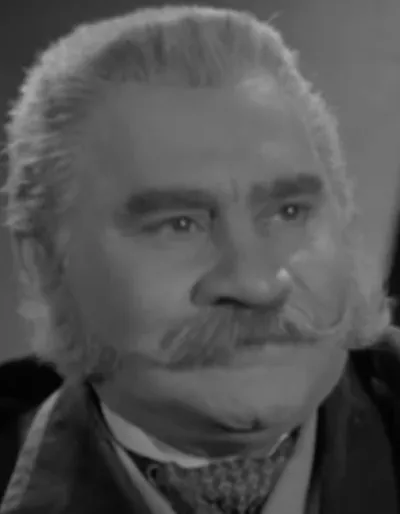
Armando Migliari
1889–1976 · Italian stage and film actor
Biography
Armando Migliari (Frosinone, 1889 – Rome, 1976) was an Italian actor who divided his career between the stage and the cinema. Working from the late silent era to the mid-1960s, he became a familiar face in Italian popular comedy and drama between the 1930s and the 1950s.
He began on stage in 1908 with Amedeo Chiantoni's company and later worked alongside performers such as Armando Falconi. His film career properly began with The Last of the Bergeracs (1934), directed by Gennaro Righelli. He then worked repeatedly with directors including Mario Mattoli, Mario Bonnard and Vittorio De Sica, and his filmography runs to more than a hundred titles. Most of his roles were supporting parts, often professors, police inspectors, notaries or doctors, giving his ensembles a steady, understated presence.
His career continued until 1965, the year of Don Camillo in Moscow, directed by Luigi Comencini. He died in Rome in 1976. He is remembered as a dependable supporting player in Italian popular cinema, especially for his work in comedies of the 1940s. Some sources give 1887 as his birth year rather than 1889.
Key films
- Maddalena, Zero for Conduct (1940), directed by Vittorio De Sica: he plays a chemistry professor in this school comedy.
- Four Steps in the Clouds (1942), directed by Alessandro Blasetti: he plays a station master in one of the period's best-known films.
- The Children Are Watching Us (1943), directed by Vittorio De Sica: a supporting role in De Sica's drama about children.
- Toto in Color (1952), directed by Steno: he plays the mayor of Caianiello in this comedy with Totò.
Trivia
A repertory tie to Mattoli
Migliari appears in many films directed by Mario Mattoli, with whom he worked on comedies from the late 1930s through the 1940s.
From silent to sound
Although he started in silent films, his most steady work came with sound cinema from the mid-1930s onward.
On Cinematopedia
 The Little World of Don Camillo1952
 Four Steps in the Clouds1942
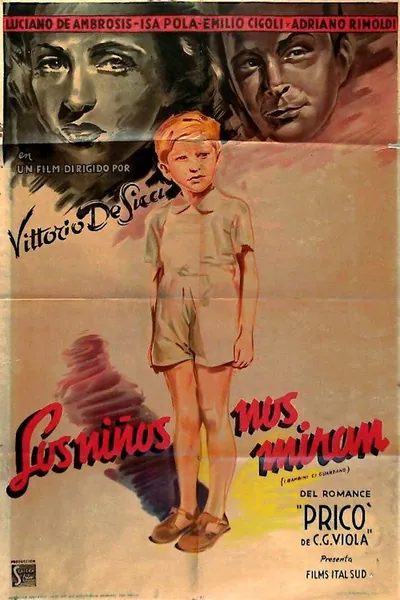 The Children Are Watching Us1944Angelina1947Angelina1947Don Camillo: Monsignor1961Don Camillo: Monsignor1961Maddalena, Zero for Conduct1940Maddalena, Zero for Conduct1940Don Camillo in Moscow1966Don Camillo in Moscow1966A Garibaldian in the Convent1942A Garibaldian in the Convent1942Toto in Color1952Toto in Color1952Backstage1939Backstage1939
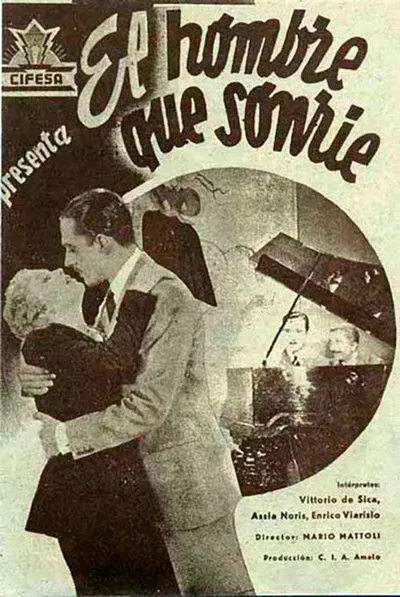 The Man Who Smiles1936
 The Castiglioni Brothers1937
- The Man Who Smiles 1936 · cast
- La Damigella di Bard 1936 · cast
- To Live 1936 · cast
- The Castiglioni Brothers 1937 · cast
- It Was I! 1937 · cast
- A Lady Did It 1938 · cast
- At Your Orders, Madame 1938 · cast
- The Count of Brechard 1938 · cast
- The Two Mothers 1938 · cast
- Backstage 1939 · cast
- In the Country Fell a Star 1939 · cast
- Lo vedi come sei... lo vedi come sei? 1939 · cast
- We Were Seven Widows 1939 · cast
- Defendant, Stand Up! 1939 · cast
- The Sons of the Marquis Lucera 1939 · cast
- The Marquis of Ruvolito 1939 · cast
- Maddalena, Zero for Conduct 1940 · cast
- A Romantic Adventure 1940 · cast
- Antonio Meucci 1940 · cast
- The Last Dance 1941 · cast
- Four Steps in the Clouds 1942 · cast
- A Garibaldian in the Convent 1942 · cast
- Invisible Chains 1942 · cast
- Nothing New Tonight 1942 · cast
- Wedding Day 1942 · cast
- Music on the Run 1943 · cast
- Giacomo the Idealist 1943 · cast
- The Children Are Watching Us 1944 · cast
- Angelina 1947 · cast
- Tomorrow Is Too Late 1950 · cast
- Totò Le Mokò 1950 · cast
- Housemaid 1951 · cast
- The Little World of Don Camillo 1952 · cast
- Toto in Color 1952 · cast
- Don Camillo: Monsignor 1961 · cast
- Don Camillo in Moscow 1966 · cast
Original Cinematopedia text based on Wikipedia (es) and Wikipedia (en) and Wikidata.