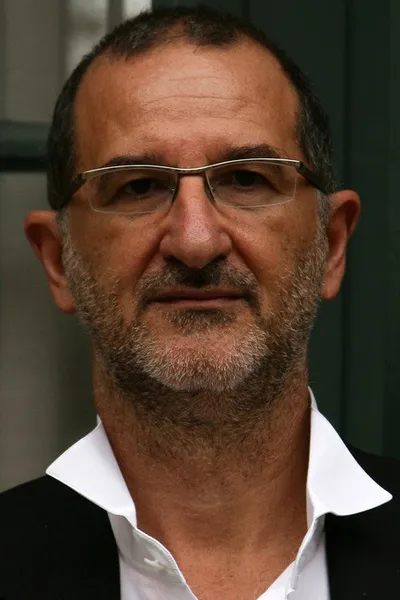
Armand Amar
b. 1953 · French composer of film, ballet and theatre music
Biography
Armand Amar is a French composer of film, dance and theatre scores, born in 1953 in Jerusalem. He grew up in Morocco and later settled in Paris, where most of his career has taken place. Among cinephiles he is known for a large body of film work that blends Eastern musical traditions with a European sensibility.
His musical path began in his teens, when he started playing congas in the late 1960s and later took up the tabla and the zarb. In 1976 he met the South African choreographer Peter Goss, who introduced him to dance, and over the following years he wrote for many contemporary choreographers. His film career followed, most notably with Amen. for Costa-Gavras, whose later films he scored, and with Live and Become and Days of Glory for Radu Mihăileanu and Rachid Bouchareb. In 1994 he co-founded the Long Distance label with Alain Weber and Peter Gabriel.
His output also includes documentaries such as Home, which earned an IFMCA award, and the César and Gopo awards for The Concert. He remains active across film, television and the stage, and his legacy lies in a style where Eastern and Western elements sit together without strain.
Key films
- Amen. (2002), directed by Costa-Gavras, one of his first major film collaborations.
- Days of Glory (2006), directed by Rachid Bouchareb, with a score nominated for a César.
- Home (2009), directed by Yann Arthus-Bertrand, a documentary whose score won an IFMCA award.
- The Concert (2009), directed by Radu Mihăileanu, which brought him the César for Best Original Music.
- Belle and Sebastian (2013), directed by Nicolas Vanier, a family film that was a major hit in France.
- Bab'Aziz: The Prince Who Contemplated His Soul (2005), directed by Nacer Khémir, showing his interest in Eastern music.
On Cinematopedia
 Home2009
 Days of Glory2006
 Amen.2002
 Outside the Law2010
 The Source2011
 Live and Become2005
 The Concert2009
 Belle and Sebastian2013
 Mia and the White Lion2018
 Minecraft: The Story of Mojang2012
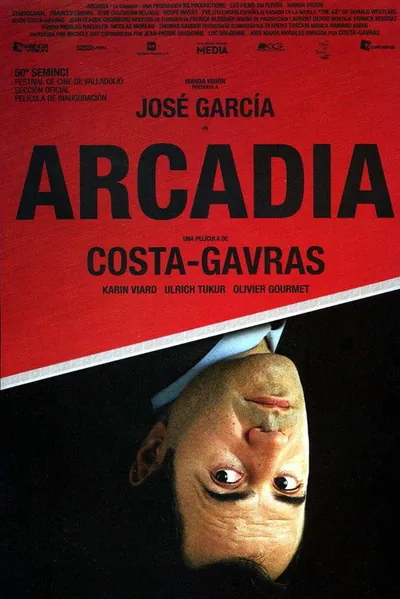 The Ax2005
 London River2009
- Amen. 2002 · music
- The Sleeping Child 2004 · music
- Live and Become 2005 · music
- The Ax 2005 · music
- Bab'Aziz: The Prince Who Contemplated His Soul 2005 · music
- Days of Glory 2006 · music
- Blame It on Fidel 2006 · music
- The Colonel 2006 · music
- Cartouches Gauloises 2007 · music
- Sagan 2008 · music
- Home 2009 · music
- The Concert 2009 · music
- London River 2009 · music
- Eden Is West 2009 · music
- Outside the Law 2010 · music
- Ao: The Last Hunter 2010 · music
- The Source 2011 · music
- Free Men 2011 · music
- You Will Be My Son 2011 · music
- Minecraft: The Story of Mojang 2012 · music
- Capital 2012 · music
- What the Day Owes the Night 2012 · music
- My Sweet Orange Tree 2012 · music
- Planet Ocean 2012 · music
- Belle and Sebastian 2013 · music
- A Thousand Times Good Night 2013 · music
- The Nightingale 2013 · music
- 24 Days 2014 · music
- Belle & Sebastian: The Adventure Continues 2015 · music
- Human 2015 · music
- Algeria from Above 2015 · music
- The Crew 2015 · music
- The Scent of Mandarin 2015 · music
- A Bag of Marbles 2017 · music
- Belle and Sebastian: Friends for Life 2017 · music
- Mia and the White Lion 2018 · music
- Spread Your Wings 2019 · music
- Autumn and the Black Jaguar 2024 · music
Original Cinematopedia text based on Wikipedia (en) and Wikidata.