Anthony Hinds
1922–2013 · British screenwriter and producer
Biography
Anthony Hinds (Ruislip, 1922 – Chadlington, 2013) was an English screenwriter and producer, also known as Tony Hinds and, for his screenwriting work, as John Elder. The son of the founder of Hammer Film Productions, he became a key figure in British horror cinema of the 1950s and 1960s.
After serving as an RAF pilot in the Second World War, he returned to Hammer in 1946 and spent years producing modest thrillers. His most notable contribution was urging the company to buy the big-screen rights to The Quatermass Experiment, the BBC serial by Nigel Kneale, and proposing that films be shot in country houses, a cheaper alternative to a full studio. The company settled at Bray Studios until 1966.
From the mid-1960s he concentrated on screenwriting, often under the name John Elder, and wrote for the studio's Dracula and Frankenstein series. His last screenwriting credit came in 1984. A horror script he wrote in the 1970s, The Unquenchable Thirst of Dracula, was never filmed, but it was staged as a reading in 2015 and broadcast by BBC Radio 4 in 2017, with Michael Sheen as narrator. He died in 2013 of complications from Parkinson's disease.
Key films
- The Curse of Frankenstein (1957): the first film in Hammer's Frankenstein series, on which Hinds worked as producer or writer.
- The Quatermass Xperiment (1955): the first big-screen adaptation of the BBC serial, a project Hinds championed.
- Dracula (1958): the starting point of Hammer's Dracula cycle.
- The Hound of the Baskervilles (1959): a Conan Doyle adaptation, one of Hammer's forays into mystery.
- Dracula: Prince of Darkness (1966): a sequel in the cycle, made while Hinds was focused on writing.
Trivia
Country houses as sets
Hinds proposed renting country houses and filming in their rooms and grounds, which avoided the cost of a full studio. The company acquired Down Place and renamed it Bray Studios.
A shop with his family name
In The Dark Road (1947), one of the low-budget quota quickies, a jewellery shop called 'Hinds' appears, a reference to his father's original business.
A script heard decades later
The Unquenchable Thirst of Dracula was never made into a film. It received a stage reading in 2015 and a studio production on BBC Radio 4 in 2017.
On Cinematopedia
 Dracula1958
 The Hound of the Baskervilles1959
 The Curse of Frankenstein1957
 Dracula: Prince of Darkness1966
 Dracula Has Risen from the Grave1968
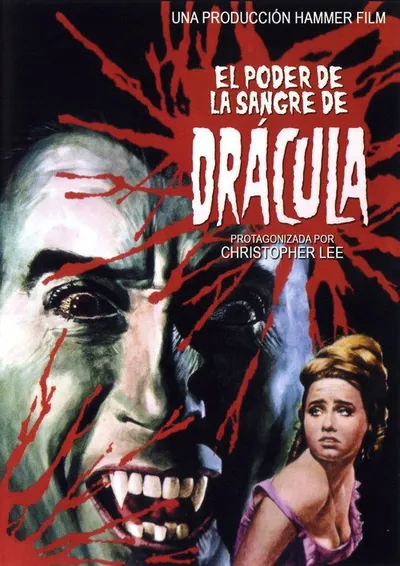 Taste the Blood of Dracula1970
 The Brides of Dracula1960
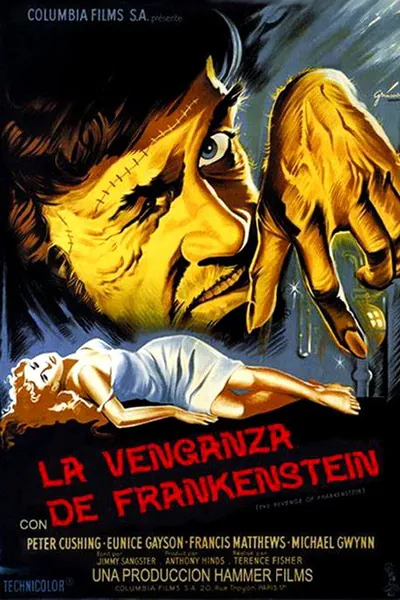 The Revenge of Frankenstein1958
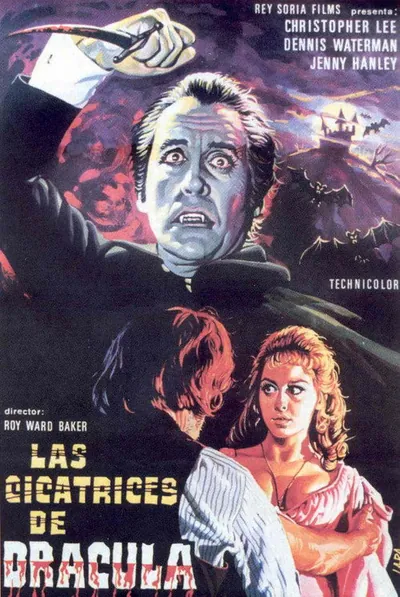 Scars of Dracula1970
 The Evil of Frankenstein1964
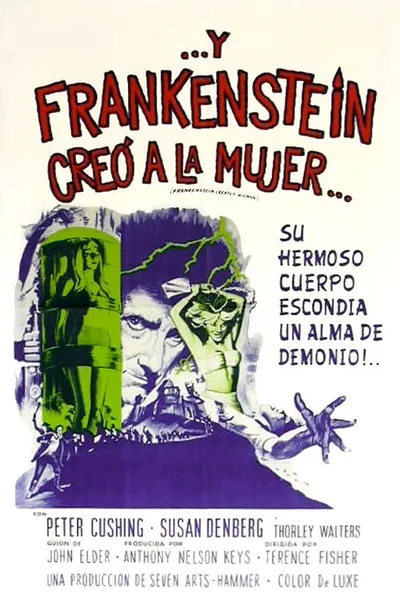 Frankenstein Created Woman1967
 The Quatermass Xperiment1955
- Lady in the Fog 1952 · producer
- Stolen Face 1952 · producer
- The Last Page 1952 · producer
- The Quatermass Xperiment 1955 · producer
- X the Unknown 1956 · producer
- The Curse of Frankenstein 1957 · producer
- Quatermass II 1957 · producer
- Dracula 1958 · producer
- The Revenge of Frankenstein 1958 · producer
- The Camp on Blood Island 1958 · producer
- The Hound of the Baskervilles 1959 · producer
- The Brides of Dracula 1960 · screenplay, producer
- Paranoiac 1960 · producer
- Never Take Sweets from a Stranger 1960 · producer
- The Curse of the Werewolf 1961 · screenplay, producer
- The Damned 1961 · producer
- The Phantom of the Opera 1962 · screenplay, producer
- Captain Clegg 1962 · screenplay
- The Kiss of the Vampire 1963 · screenplay, producer
- The Old Dark House 1963 · producer
- The Evil of Frankenstein 1964 · screenplay, producer
- Fanatic 1965 · producer
- Dracula: Prince of Darkness 1966 · screenplay
- Rasputin, the Mad Monk 1966 · screenplay
- The Reptile 1966 · screenplay
- Frankenstein Created Woman 1967 · screenplay
- Dracula Has Risen from the Grave 1968 · screenplay
- Taste the Blood of Dracula 1970 · screenplay
- Scars of Dracula 1970 · screenplay
- Frankenstein and the Monster from Hell 1974 · screenplay
- Legend of the Werewolf 1975 · screenplay
Original Cinematopedia text based on Wikipedia (en) and Wikidata.