
Anne Bancroft
1931–2005 · American actress, director and screenwriter
Biography
Anne Bancroft, born Anna Maria Louisa Italiano (New York, 1931 – New York, 2005), was an American actress associated with the Method, having studied under Lee Strasberg. Her career spanned film, stage and television, and she is remembered for winning an Academy Award, two Tony Awards and several Emmy and Golden Globe awards. Her work across the 1950s to the 2000s makes her one of the more versatile performers of her generation.
Born in the Bronx to parents who were children of Italian immigrants, she began in live television dramas under the name Anne Marno before studio executives persuaded her to adopt the surname Bancroft, which she chose because it sounded dignified. She made her screen debut in 1952 in Don't Bother to Knock, opposite Marilyn Monroe, and signed a six-year contract with 20th Century Fox whose roles did not satisfy her. She therefore continued working in New York theatre, where in 1958 she won a Tony for featured actress in Two for the Seesaw, directed by Arthur Penn.
Her breakthrough came with The Miracle Worker (1962), the film adaptation of the stage play in which she had already triumphed on Broadway as Annie Sullivan, the teacher of Helen Keller. Penn insisted she reprise the role despite United Artists executives who wanted a more established star, and the Academy Award for Best Actress confirmed the decision. That combination of Oscar and Tony for the same role is why she is counted among the few performers to have achieved it.
She became closely identified with The Graduate (1967), in which Mike Nichols cast her as Mrs. Robinson, an unhappily married woman who seduces a recent college graduate played by Dustin Hoffman. The film earned her an Oscar nomination and lasting fame, though she said in several interviews that the character overshadowed her other work. Over time the role became an archetype of the older woman, a point of interest given that she was only six years older than Hoffman.
In 1964 she married the comedian Mel Brooks, to whom she remained married until her death, and they had a son, the author Max Brooks. Brooks directed and produced several projects in which she appeared, including The Elephant Man (1980), and the two worked together on To Be or Not to Be (1983). Bancroft also worked extensively on television, winning an Emmy for the special Annie: The Women in the Life of a Man (1970), and she made her debut as a writer and director with Fatso (1980).
From the late 1980s she took mostly supporting parts, while remaining a steady presence in mainstream films such as Honeymoon in Vegas (1992) and G.I. Jane (1997). Her last on-screen appearance was as herself in a 2004 episode of Curb Your Enthusiasm, and her final film, the animated Delgo, was released in 2008, after her death. She died in Manhattan in 2005, aged 73, of uterine cancer, an illness she had not made public. Her legacy rests largely on her Anne Sullivan and her Mrs. Robinson, two roles that define a career of considerable range.
Key films
- The Graduate (1967): Mrs. Robinson, the role that made her famous and earned an Oscar nomination.
- The Miracle Worker (1962): Annie Sullivan, for which she won the Academy Award for Best Actress.
- The Elephant Man (1980): one of her collaborations with Mel Brooks, directed by David Lynch.
- Agnes of God (1985): an Oscar nomination for her performance as a psychiatrist.
- G.I. Jane (1997): a supporting role in one of her last major studio productions.
- Seven Women (1966): directed by John Ford, one of her less familiar titles.
On Cinematopedia
 The Graduate1967
 The Elephant Man1980
 The Miracle Worker1962
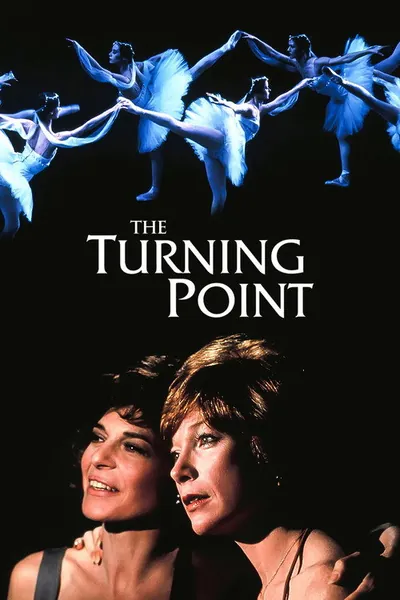 The Turning Point1977
 G.I. Jane1997
 Dracula: Dead and Loving It1995
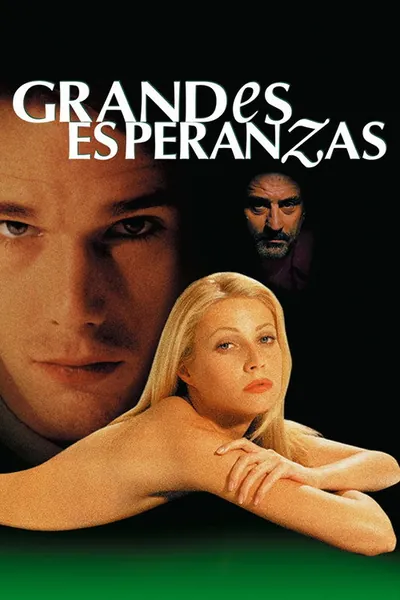 Great Expectations1998
 Young Winston1972
 Silent Movie1976
 Agnes of God1985
 Heartbreakers2001
 Honeymoon in Vegas1992
- Don't Bother to Knock 1952 · cast
- Demetrius and the Gladiators 1954 · cast
- The Last Frontier 1955 · cast
- The Miracle Worker 1962 · cast
- The Pumpkin Eater 1964 · cast
- The Slender Thread 1965 · cast
- 7 Women 1966 · cast
- The Graduate 1967 · cast
- Young Winston 1972 · cast
- The Hindenburg 1975 · cast
- The Prisoner of Second Avenue 1975 · cast
- Silent Movie 1976 · cast
- Lipstick 1976 · cast
- The Turning Point 1977 · cast
- The Elephant Man 1980 · cast
- Marco Polo 1982 · cast
- To Be or Not to Be 1983 · cast
- Agnes of God 1985 · cast
- 84 Charing Cross Road 1987 · cast
- Torch Song Trilogy 1988 · cast
- Honeymoon in Vegas 1992 · cast
- Love Potion No. 9 1992 · cast
- Point of No Return 1993 · cast
- Malice 1993 · cast
- Mr. Jones 1993 · cast
- Dracula: Dead and Loving It 1995 · cast
- How to Make an American Quilt 1995 · cast
- Sunchaser 1996 · cast
- Home for the Holidays 1996 · cast
- G.I. Jane 1997 · cast
- Great Expectations 1998 · cast
- Keeping the Faith 2000 · cast
- Heartbreakers 2001 · cast
Original Cinematopedia text based on Wikipedia (es) and Wikipedia (en) and Wikidata.