
Andrew Marton
1904–1992 · Hungarian-American film director
Biography
Andrew Marton, born Endre Marton in Budapest in 1904 and died in Santa Monica in 1992, was a Hungarian-American film director. He also worked as a second unit director and as an editor, and his name is tied above all to large-scale Hollywood epics of the 1950s and 1960s. His career spans European cinema between the wars, Hollywood studio filmmaking and, to a lesser extent, television.
After finishing secondary school in 1922, Alfréd Deésy took him to Vienna to work at Sascha-Film, mainly as an assistant editor. Ernst Lubitsch noticed him and encouraged him to try Hollywood. Marton went back to Europe in 1927, cutting films for the Tobis company in Berlin and later working as an assistant director in Vienna. His first feature was Two O'Clock in the Morning, shot in Britain in 1929. In 1934 he joined a German expedition to Tibet, which produced Demon of the Himalayas. He later said that his Jewish background kept his name off the film, a claim tied to a conversation with Joseph Goebbels. After spells in Hungary and in London with Alexander Korda, he settled in the United States when the Second World War broke out. In the 1940s and 1950s he worked mostly for MGM, and in 1954 he set up a production company with Ivan Tors, Louis Meyer and László Benedek.
In Hollywood he became a specialist in big-budget spectacle. He was second unit director on Ben-Hur and Cleopatra, where he staged the famous chariot race of the former, and he handled the battle scenes of A Farewell to Arms. On 55 Days at Peking he moved from second unit work to shooting additional scenes without credit, and he devised the opening sequence. His work focuses on exoticism, nature and spectacle. He also made nature films for television and supervised episodes of series such as Flipper and Daktari. He worked as second unit director for William Wyler, Fred Zinnemann, Joseph L. Mankiewicz and Mike Nichols, and the director John Landis called him his mentor. He remained active until the mid-1970s. His legacy lies mainly in the action and crowd sequences he helped build behind the camera.
Key films
- Green Fire (1954): directed by Marton, one of his best-known exotic adventure films.
- King Solomon's Mines (1950): an African adventure for MGM that he directed.
- Ben-Hur (1959): as second unit director, he staged the chariot race, one of the most famous sequences in epic cinema.
- A Farewell to Arms (1957): responsible for the battle scenes of this Hemingway adaptation.
- 55 Days at Peking (1963): directed additional scenes and devised the film's opening.
- The Message (1976): one of his last notable works as a second unit director, on the life of Muhammad.
Trivia
A missing name
Marton said that his Jewish origin prevented his name from appearing as director of Demon of the Himalayas, citing a conversation with Joseph Goebbels.
Mentor to John Landis
Director John Landis referred to Marton as his mentor.
On Cinematopedia
 Lost Horizon1937
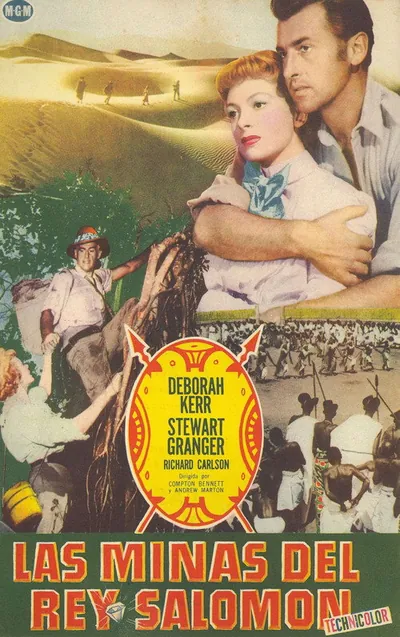 King Solomon's Mines1950
 The Message1976
 A Farewell to Arms1957
 55 Days at Peking1963
 Two-Faced Woman1941
 Green Fire1954
 Into the Night1985
 The Student Prince in Old Heidelberg1927
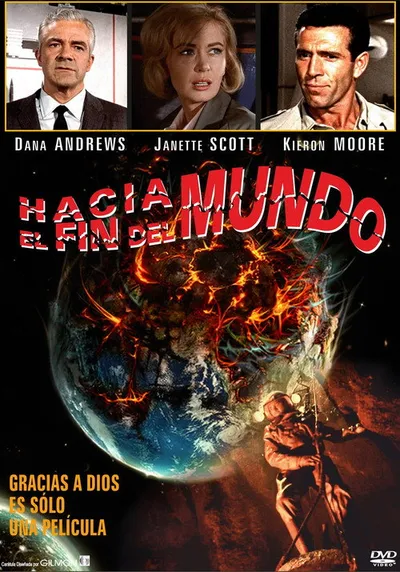 Crack in the World1965
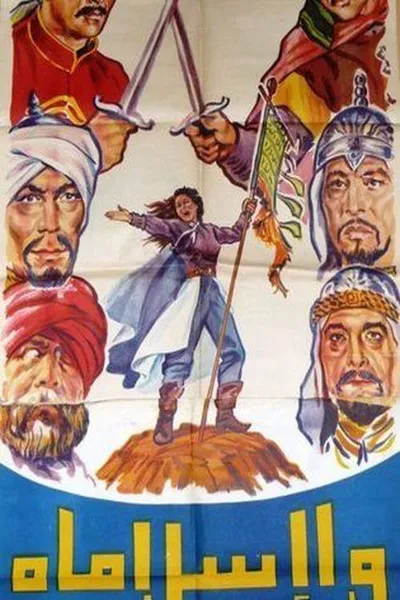 Oh Islam1961
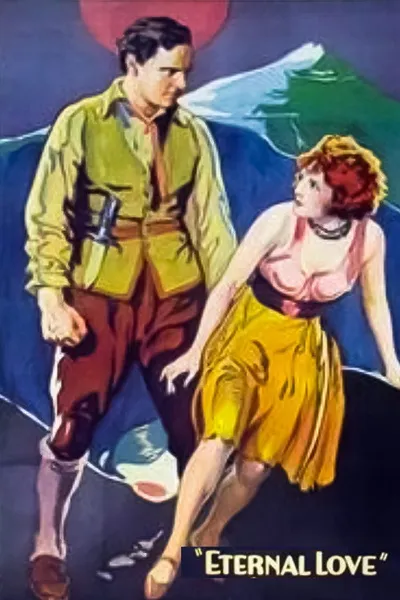 Eternal Love1929
- The Student Prince in Old Heidelberg 1927 · editing
- Eternal Love 1929 · editing
- The Song Is Ended 1930 · editing
- Miss President 1935 · director
- Lost Horizon 1937 · director
- Two-Faced Woman 1941 · director
- King Solomon's Mines 1950 · director
- Green Fire 1954 · director
- A Farewell to Arms 1957 · director
- Oh Islam 1961 · director
- 55 Days at Peking 1963 · director
- Crack in the World 1965 · director
- The Last Roman 1968 · director
- The Message 1976 · director
- Into the Night 1985 · cast
Original Cinematopedia text based on Wikipedia (es) and Wikipedia (en) and Wikidata.