
Alfred Schnittke
1934–1998 · Soviet and German composer, known for film scores
Biography
Alfred Schnittke (born in Engels, 1934; died in Hamburg, 1998) was a Soviet and later German composer, and one of the most important musicians of the late Soviet period. He is best known for his symphonic and chamber works, but film music occupied a large part of his working life. His career shows how a generation of Soviet composers tried to find an individual voice within the cultural demands of the state.
His father was a German-born journalist of Jewish background and his mother was a Volga German. Schnittke spent part of his youth in Vienna, where his father was posted, and began his musical training there in 1946. The family moved to Moscow in 1948. He completed his composition studies at the Moscow Conservatory in 1961 and taught there from 1962 to 1972.
For much of his career he earned his living from film scores, producing nearly seventy scores over some thirty years. He wrote the music for Aleksandr Askoldov's Commissar, mixing European, Russian and Jewish musical patterns. His early style owed much to Shostakovich, and after encountering European avant-garde music in the mid-1950s he turned briefly to serial techniques.
From the early 1970s he simplified his language and developed polystylism, a deliberate juxtaposition of musical styles from the past and present. His First Symphony (1969-1972) and First Concerto Grosso (1977) are key examples. His relations with the Soviet cultural bureaucracy were strained. He faced public attacks during the 1970s, and his First Symphony was effectively banned. In the late 1980s he left the Soviet Union and settled in Hamburg, Germany.
During the 1980s his music became better known abroad, helped by performers such as Gidon Kremer and Mstislav Rostropovich. As his health declined, his style became more withdrawn and spiritual. He suffered a stroke in 1985 that left him in a coma, and a further stroke in 1994 left him almost completely paralysed. He died in Hamburg on 3 August 1998 and was buried with state honours in Moscow. Today he is valued for his late symphonies and quartets, and for bringing Soviet music to an international audience.
Key films
- The Commissar (1967): film score for Aleksandr Askoldov's film, combining European, Russian and Jewish musical patterns.
- Belorussian Station (1971): one of his scores for Soviet cinema of the period.
- The Ascent (1977): score for Larisa Shepitko's film.
- Agony (1981): music for Elem Klimov's historical drama about Rasputin.
- Farewell (1983): score for the adaptation of Valentin Rasputin's novel.
Trivia
A rejected prize
In 1991 he was awarded a Lenin Prize in the final edition of the award. Schnittke refused it, distancing himself from the direction of Soviet music.
A symphony after his death
His Ninth Symphony was premiered on 19 June 1998 in Moscow, in a version deciphered and arranged by Gennady Rozhdestvensky, which Schnittke asked to be withdrawn after hearing a recording. After his death, Alexander Raskatov completed the score.
On Cinematopedia
 The Ascent1977
 Commissar1967
 Belorussian Station1971
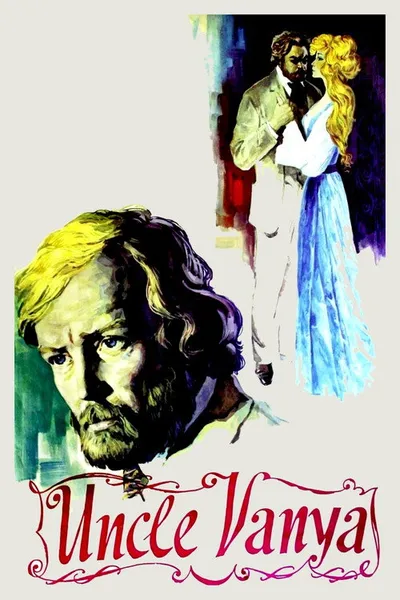 Uncle Vanya1970
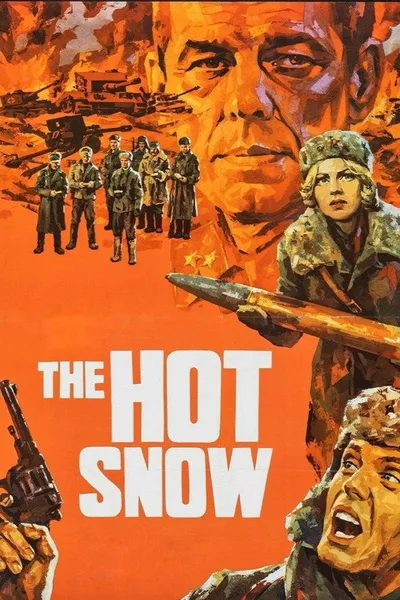 Hot Snow1972
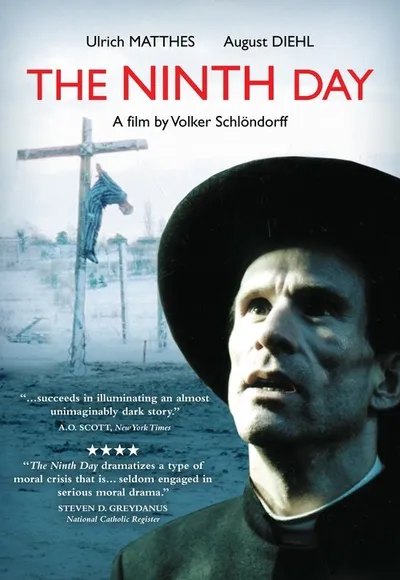 The Ninth Day2004
 How Czar Peter the Great Married Off His Moor1976
 Air Crew1980
 Farewell1983
 The Master and Margarita2006
 The White Ship1976
 Agony1981
- Introduction to Life 1963 · music
- Adventures of a Dentist 1965 · music
- Day Stars 1966 · music
- Commissar 1967 · music
- Uncle Vanya 1970 · music
- Sport, Sport, Sport 1970 · music
- Belorussian Station 1971 · music
- You and Me 1971 · music
- Hot Snow 1972 · music
- The Seagull 1972 · music
- Autumn 1974 · music
- Take Aim 1975 · music
- How Czar Peter the Great Married Off His Moor 1976 · music
- The White Ship 1976 · music
- Rikki-Tikki-Tavi 1976 · music
- Story of an Unknown Actor 1976 · music
- The Ascent 1977 · music
- Father Sergius 1978 · music
- Air Crew 1980 · music
- Agony 1981 · music
- Starfall 1981 · music
- Farewell 1983 · music
- The Story of Voyages 1983 · music
- A Visitor to a Museum 1989 · music
- The Ninth Day 2004 · music
- The Master and Margarita 2006 · music
Original Cinematopedia text based on Wikipedia (es) and Wikipedia (en) and Wikidata.