
Alan Crosland
1894–1936 · American film director and stage actor
Biography
Frederick Alan Crosland (New York, August 10, 1894 – Hollywood, July 16, 1936) was an American film director and stage actor. His name is tied to the arrival of sound cinema: he directed Don Juan (1926), one of the first commercial features with synchronized music and sound effects, and The Jazz Singer (1927), usually cited as the first major commercial hit with synchronized spoken dialogue. He worked during the late silent era and the early years of talkies.
Born in New York City into a well-off family, he attended Dartmouth College and then worked as a writer for a New York magazine. Drawn to the theatre, he acted in several productions alongside the Shakespearean actress Annie Russell. He entered the film business in 1912 at the Edison Studios in the Bronx, where he spent about two years in various jobs before he was ready to direct short films. By 1917 he was directing features.
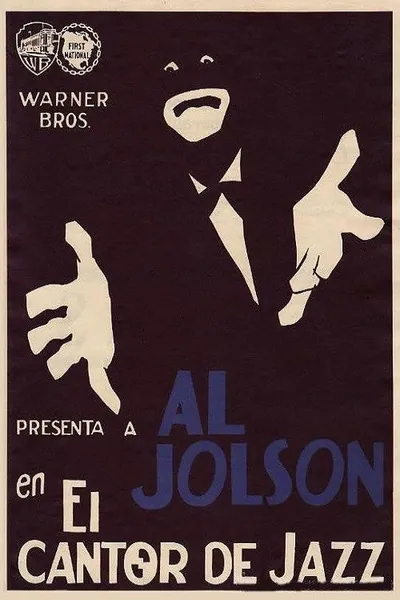
In 1920 he directed Olive Thomas in The Flapper, one of her last films before her death that year. In 1925, while working for Famous Players-Lasky, he was hired by Warner Bros. for its Hollywood studios. There he made several silent films, including Don Juan with John Barrymore, which used a synchronized score and effects but no spoken dialogue. He was then chosen to direct Al Jolson in The Jazz Singer, and its success linked his name to the start of the talkie era.
Throughout the 1930s Crosland kept directing a large number of films across many genres, with uneven results. He died in 1936, at 41, after an automobile accident on Sunset Boulevard in Los Angeles. His grave went unmarked for decades until a headstone was added in 2003 through a private initiative. He is remembered mainly for his role in the shift to sound, and his son, Alan Crosland Jr., also worked as a television director.
Key films
- Don Juan (1926): an early Warner feature with synchronized Vitaphone music and effects, though without spoken dialogue.
- The Jazz Singer (1927): the Al Jolson film that helped decisively launch the sound era.
- The Flapper (1920): directed with Olive Thomas, one of her final films.
- Song of the Flame (1930): a early sound-era musical from his later work.
- The Beloved Rogue (1927): a silent-era costume drama starring John Barrymore.
- The Great Impersonation (1935): a mid-1930s thriller from his later career.
Trivia
An early step toward sound
Don Juan was among the first features with music and effects synchronized through the Vitaphone system, though it had no spoken dialogue.
A grave without a marker
His grave at Hollywood Forever Cemetery went without a headstone for 67 years, until one was donated in 2003.
On Cinematopedia
 The Jazz Singer1927
 Sweet Smell of Success1957
 Adventures of Don Juan1948
 Glorious Betsy1928
 The Flapper1920
 Don Juan1926
 Young Man with a Horn1950
 Song of the Flame1930
 Enemies of Women1923
 When a Man Loves1927
 On with the Show!1929
 Three Weeks1924
- The Flapper 1920 · director
- Enemies of Women 1923 · director
- Three Weeks 1924 · director
- Unguarded Women 1924 · director
- Don Juan 1926 · director
- The Jazz Singer 1927 · director
- When a Man Loves 1927 · director
- Old San Francisco 1927 · director
- The Beloved Rogue 1927 · director
- Glorious Betsy 1928 · director
- On with the Show! 1929 · director
- Song of the Flame 1930 · director
- Hello, Sister! 1933 · director
- Adventures of Don Juan 1948 · editing
- Young Man with a Horn 1950 · editing
- Sweet Smell of Success 1957 · editing
Original Cinematopedia text based on Wikipedia (es) and Wikipedia (en) and Wikidata.