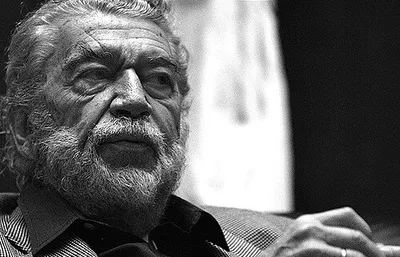
Alain Robbe-Grillet
1922–2008 · French writer and filmmaker, a leading figure of the nouveau roman
Biography
Alain Robbe-Grillet (Brest, 1922 – Caen, 2008) was a French writer and filmmaker, the main theorist and driving force of the nouveau roman, the literary movement that reshaped European fiction in the 1950s and 1960s alongside Nathalie Sarraute, Michel Butor and Claude Simon. His work in cinema, as screenwriter and director, also gave him a lasting place in the history of auteur film, above all through his collaboration with Alain Resnais.
Born in Brest to a family of engineers and scientists, he moved early to Paris, where he studied at the Lycée Saint-Louis. He trained as an agricultural engineer, completing his diploma in 1945 at the National Institute of Agronomy, and his work took him to Martinique, French Guiana, Guadeloupe and Morocco. In 1953 Les Éditions de Minuit published The Erasers (Les Gommes), his first novel in the new manner, and he then gave up engineering to write full-time. Roland Barthes praised his early work, and the two remained close friends for life. The Voyeur (1955) won the Prix des Critiques, and his long association with the publisher, where he served as literary adviser from 1955 to 1985, helped establish his standing in France.
In 1961 Resnais asked him to write the script for Last Year at Marienbad, a film that was credited as a joint work and became one of the most debated of its era. He then began directing his own features, a body of about ten films with a cerebral and often provocative tone that returned to the preoccupations of his novels: looking, the body as text, the double. Among them are L'Immortelle (1963), Trans-Europ-Express (1966), his most commercially successful film after Marienbad, and The Man Who Lies (1968), all built on cool, repetitive staging. Jean-Louis Trintignant worked with him on several of them, and his wife, the writer Catherine Robbe-Grillet, acted and assisted on some films.
His fiction relies on methodical, geometric and repetitive descriptions of objects and places, which stand in for explicit psychology while also revealing it. Readers have to reconstruct the story like a puzzle, from repetitions, apparently trivial details and breaks in narrative logic. Critics have compared this fragmentation of time and plot to cubist painting, and his books have been read as realist, phenomenological or as a theory of pure surface. In 1963 he gathered his theoretical essays in Pour un nouveau roman, which made him the movement's principal theorist.
For decades he combined writing with teaching in the United States, at New York University and Washington University in Saint Louis, and he led the Centre for Sociology of Literature in Brussels from 1980 to 1988. He was elected to the Académie française in 2004, but never took up his seat, considering the induction ceremony and its mandatory dress outdated. He died in Caen in February 2008. His legacy lies mainly in twentieth-century experimental fiction and auteur cinema, where Last Year at Marienbad remains his best-known work.
Key films
- Last Year at Marienbad (1961), screenplay by Alain Resnais
- L'Immortelle (1963), his first film as director
- Trans-Europ-Express (1966), his most commercially successful film after Marienbad
- The Man Who Lies (1968), starring Jean-Louis Trintignant
- Playing with Fire (1975), from his 1970s period
- The Beautiful Captive (1983), his return to directing after almost a decade
Trivia
Prize for his first novel
The Erasers (Les Gommes) received the Prix Fénéon in 1953, shortly after its release by Les Éditions de Minuit.
Academy membership without installation
He was elected to the Académie française in 2004 but never took his seat, regarding the ceremony and dress code as outdated.
On Cinematopedia
 Last Year at Marienbad
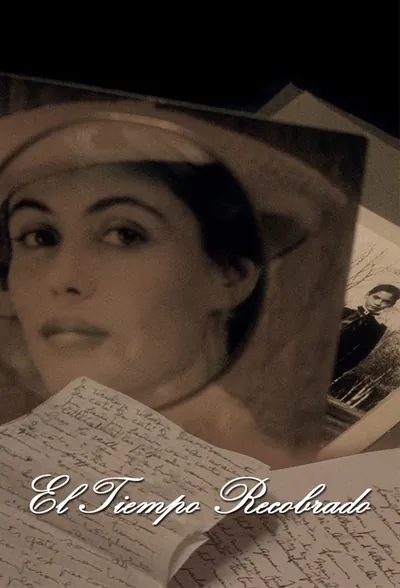 Time Regained
 Je t'aime, je t'aime
 The Man Who Lies
 La Belle captive
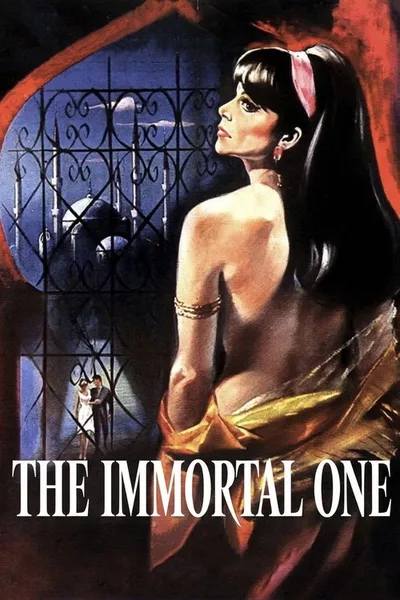 L'Immortelle
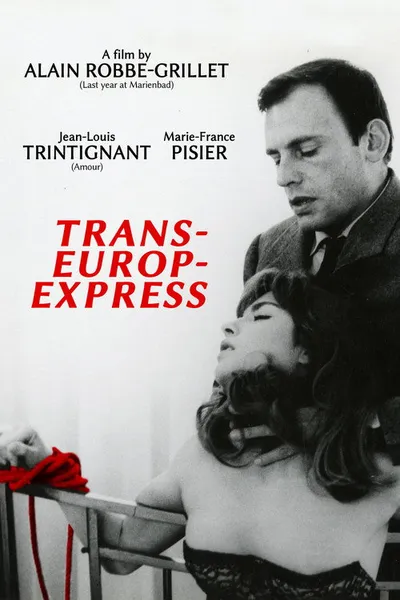 Trans-Europ-Express
 Eden and After
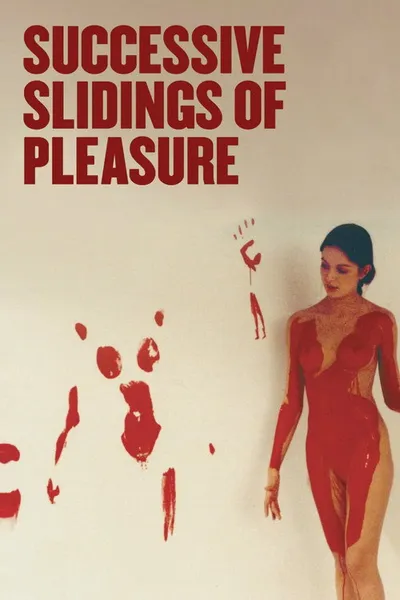 Successive Slidings of Pleasure
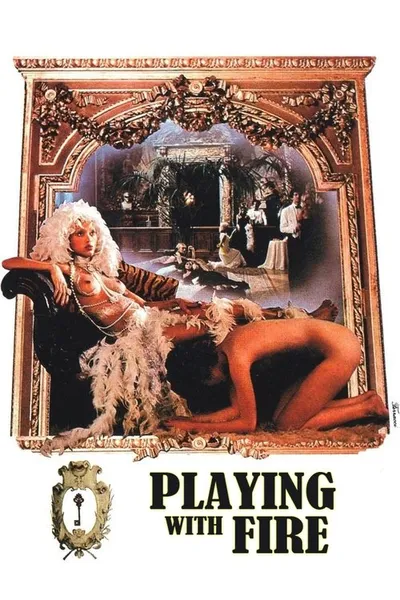 Playing with Fire
Original Cinematopedia text based on Wikipedia (es) and Wikipedia (en) and Wikidata.