
Adolphe Menjou
1890–1963 · American actor
Biography
Adolphe Menjou (Pittsburgh, 1890 - Beverly Hills, 1963) was an American actor whose career spanned the silent era and the talkies. In the 1920s he became a leading man known for a debonair, sophisticated screen presence, and later he settled into distinguished supporting roles. His career shows how Hollywood built a market for the urban gentleman as an alternative to the conventional romantic hero.
Born to a French father and an Irish mother, he attended military schools and studied engineering at Cornell University. He began in vaudeville and made his film debut in 1916. During the First World War he served as an officer, experience that later helped him play aristocrats and military men. His polished manner and wardrobe earned him a reputation as a man about town, and his supporting role in A Woman of Paris, directed by Chaplin, reinforced that image in 1923.
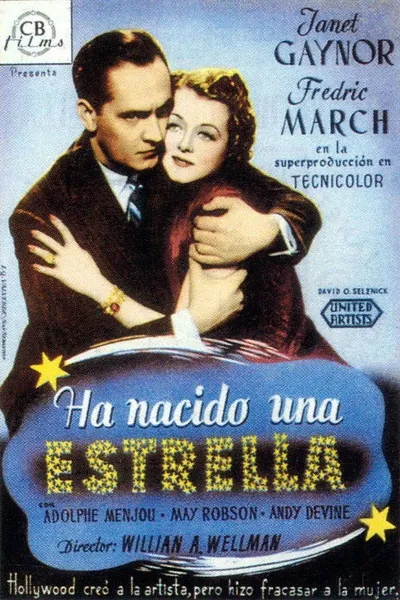
During the 1920s he moved from supporting parts in films such as The Sheik and The Three Musketeers to top billing. The transition to sound posed no real obstacle, though his career slowed for a time. He co-starred with Marlene Dietrich in Morocco (1930) and received a Best Actor Oscar nomination for The Front Page (1931) without winning. He worked with directors including Frank Borzage, Frank Capra and Stanley Kubrick, and through the 1930s he appeared in melodramas and comedies such as A Farewell to Arms and A Star Is Born.
His decline came in the 1950s. His conservative politics led him to support Senator Joseph McCarthy's anti-communist campaign, which distanced him from many progressive figures in Hollywood, and his remarks about accused performers have drawn lasting criticism. He still found notable work, including the German general in Kubrick's Paths of Glory, and his last film role came in Pollyanna (1960). He died of hepatitis in 1963. Today he is remembered as an elegant performer and a familiar face of classic Hollywood.
Key films
- A Woman of Paris (1923), in which his worldly, well-dressed image was firmly established.
- Morocco (1930), opposite Marlene Dietrich, a key early talkie leading role.
- A Farewell to Arms (1932), a supporting part in Frank Borzage's wartime romance.
- A Star Is Born (1937), one of his most recalled supporting roles of the 1930s.
- Paths of Glory (1957), as the French general antagonist in Stanley Kubrick's anti-war drama.
Trivia
A famous moustache
The painter Salvador Dalí admired Menjou and declared that his moustache was surrealist. He reportedly offered fake moustaches to others from a silver cigarette case.
Dressed to impress
Menjou was voted the best-dressed man in America nine times, and his polished image shaped much of his screen career.
On Cinematopedia
 A Farewell to Arms1932
 A Star Is Born1937
 Paths of Glory1957
 Morocco1930
 Stage Door1937
 Zelig1983
 The Front Page1931
 A Woman of Paris1923
 Morning Glory1933
 The Sheik1921
 One Hundred Men and a Girl1937
 Across the Wide Missouri1951
- The Habit of Happiness 1916 · cast
- Manhattan Madness 1916 · cast
- Wild and Woolly 1917 · cast
- The Sheik 1921 · cast
- The Three Musketeers 1921 · cast
- Through the Back Door 1921 · cast
- The Eternal Flame 1922 · cast
- Clarence 1922 · cast
- Head over Heels 1922 · cast
- A Woman of Paris 1923 · cast
- The Spanish Dancer 1923 · cast
- Bella Donna 1923 · cast
- The World's Applause 1923 · cast
- Forbidden Paradise 1924 · cast
- The Marriage Circle 1924 · cast
- Broadway After Dark 1924 · cast
- Shadows of Paris 1924 · cast
- Sinners in Silk 1924 · cast
- The Sorrows of Satan 1926 · cast
- The Ace of Cads 1926 · cast
- Morocco 1930 · cast
- The Front Page 1931 · cast
- The Easiest Way 1931 · cast
- A Farewell to Arms 1932 · cast
- Forbidden 1932 · cast
- Morning Glory 1933 · cast
- Little Miss Marker 1934 · cast
- Gold Diggers of 1935 1935 · cast
- Broadway Gondolier 1935 · cast
- The Milky Way 1936 · cast
- One in a Million 1936 · cast
- Sing, Baby, Sing 1936 · cast
- A Star Is Born 1937 · cast
- Stage Door 1937 · cast
- One Hundred Men and a Girl 1937 · cast
- The Goldwyn Follies 1938 · cast
- Golden Boy 1939 · cast
- The Housekeeper's Daughter 1939 · cast
- You Were Never Lovelier 1942 · cast
- Roxie Hart 1942 · cast
- Sweet Rosie O'Grady 1943 · cast
- Hi Diddle Diddle 1943 · cast
- Step Lively 1944 · cast
- Heartbeat 1946 · cast
- The Hucksters 1947 · cast
- State of the Union 1948 · cast
- My Dream Is Yours 1949 · cast
- To Please a Lady 1950 · cast
- Across the Wide Missouri 1951 · cast
- The Tall Target 1951 · cast
- The Sniper 1952 · cast
- Man on a Tightrope 1953 · cast
- The Ambassador's Daughter 1956 · cast
- Paths of Glory 1957 · cast
- Pollyanna 1960 · cast
- Zelig 1983 · cast
Original Cinematopedia text based on Wikipedia (es) and Wikipedia (en) and Wikidata.