
Adolfo Aristarain
1943–2026 · Argentine film director and screenwriter
Biography
Adolfo Aristarain (Buenos Aires, 1943-2026) was an Argentine film director and screenwriter, also active as an assistant director and producer. Working from the 1970s into the 2000s, he became one of the most respected filmmakers in his country, known for combining the narrative clarity of classic American cinema with the social concerns of Argentine political cinema.
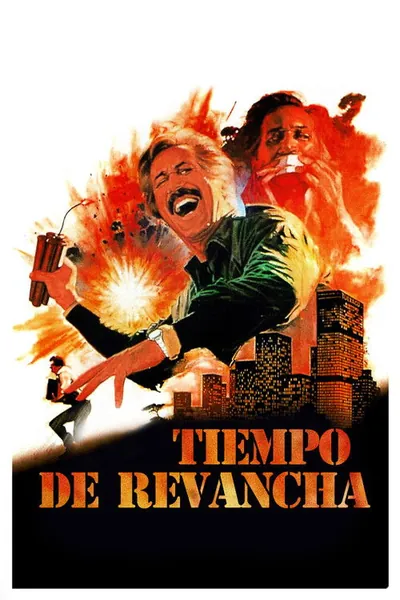
Self-taught, he developed an early love for reading and film. After living in Madrid from 1967 to 1974, he worked as an assistant director for figures such as Mario Camus, Vicente Aranda and Sergio Leone, and made his directorial debut in 1978 with a script of his own. His breakthrough came with Tiempo de revancha (1981), shot under a military junta. He went on to direct A Place in the World and Martín (Hache), often working with Federico Luppi, the actor he returned to most often.
He held Spanish citizenship from 2003 and died in Buenos Aires in April 2026, aged 82. His last three films, Martín (Hache), Common Ground and Roma, are often viewed as parts of one shared set of preoccupations, and his work remains a reference point for Argentine and Spanish cinema.
Key films
- Tiempo de revancha (1981): his major critical and commercial success, a political drama made during the military dictatorship.
- Últimos días de la víctima (1982): his fifth feature as director, made as he consolidated his career.
- A Place in the World (1992): his return to success in Argentina, starring Federico Luppi.
- Martín (Hache) (1997): shot in Spain with Luppi, it earned a nomination at the San Sebastián festival.
- Common Ground (2002): an adaptation of a novel by his cousin Lorenzo F. Aristarain.
- Roma (2004): a film mixing Argentine and Spanish actors that closed his run as a director.
Trivia
A nomination annulled
A Place in the World received an Academy Award nomination, but the Academy disqualified it because Uruguay submitted it, while the Academy considered it an Argentine production.
Censorship focused on sex
The director explained that the censors of Tiempo de revancha were mainly concerned with its sex scenes rather than its politics, and only a few frames had to be cut.
On Cinematopedia
 A Place in the World
 Martín (Hache)
 Time for Revenge
 Last Days of the Victim
 Common Places
 Roma
 Dar la cara
 The Stranger
Original Cinematopedia text based on Wikipedia (es) and Wikipedia (en) and Wikidata.